The End of Another Academic Year
We’ve had so many great things taking place inside and outside school, so we’ve put together this article to share some special moments from this summer term.

We’ve had so many great things taking place inside and outside school, so we’ve put together this article to share some special moments from this summer term.
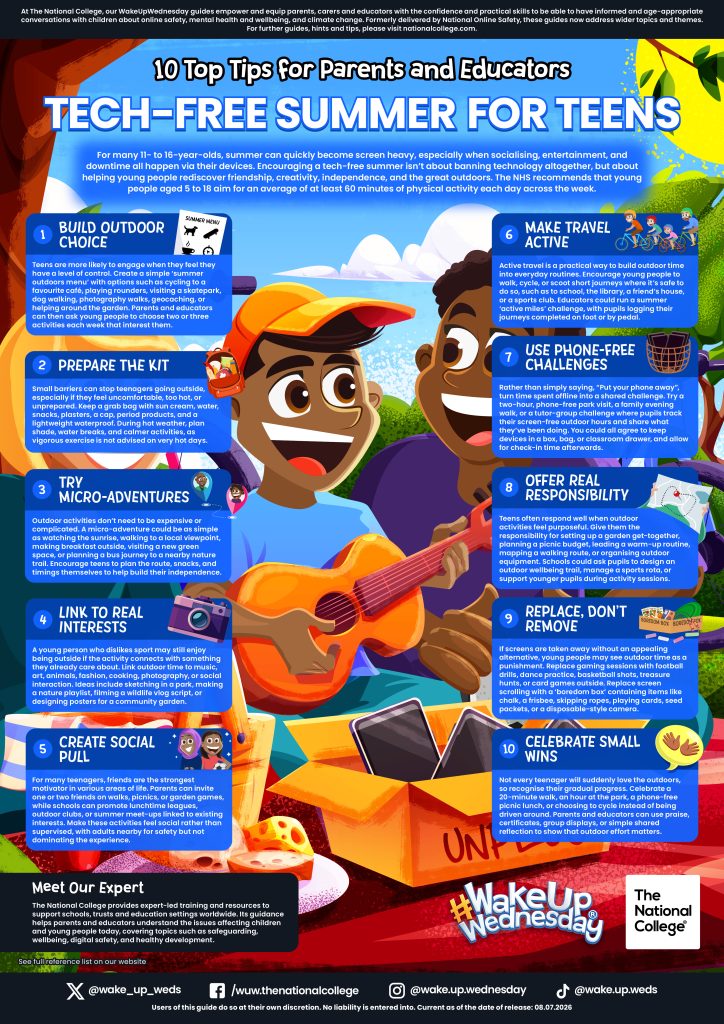
For many young people, the summer holidays can easily become dominated by phones, gaming, streaming and social media. This guide offers reassuring, realistic advice for parents, carers and educators who want to encourage 11- to 16-year-olds to spend more time offline without making technology feel like the enemy.
From phone-free challenges and micro-adventures to active travel, outdoor clubs and creative alternatives to scrolling, the guide focuses on small, achievable changes. It also highlights the importance of giving teens choice, responsibility and social motivation, helping them build confidence, wellbeing and healthier habits throughout the summer.
Screens are now part of daily life, but for very young children, simple and predictable boundaries can make a big difference. This guide explores how adults can help under-fives build healthier digital habits by choosing content carefully, keeping devices in shared spaces, protecting bedtime routines and making screen time feel calm rather than constant.
It also highlights the importance of adult involvement, from co-viewing and chatting about what children see to modelling balanced device use ourselves. With practical scripts, transition tips and age-appropriate routines, the guide offers supportive advice for families, nurseries and early years settings looking to manage screen time with confidence.
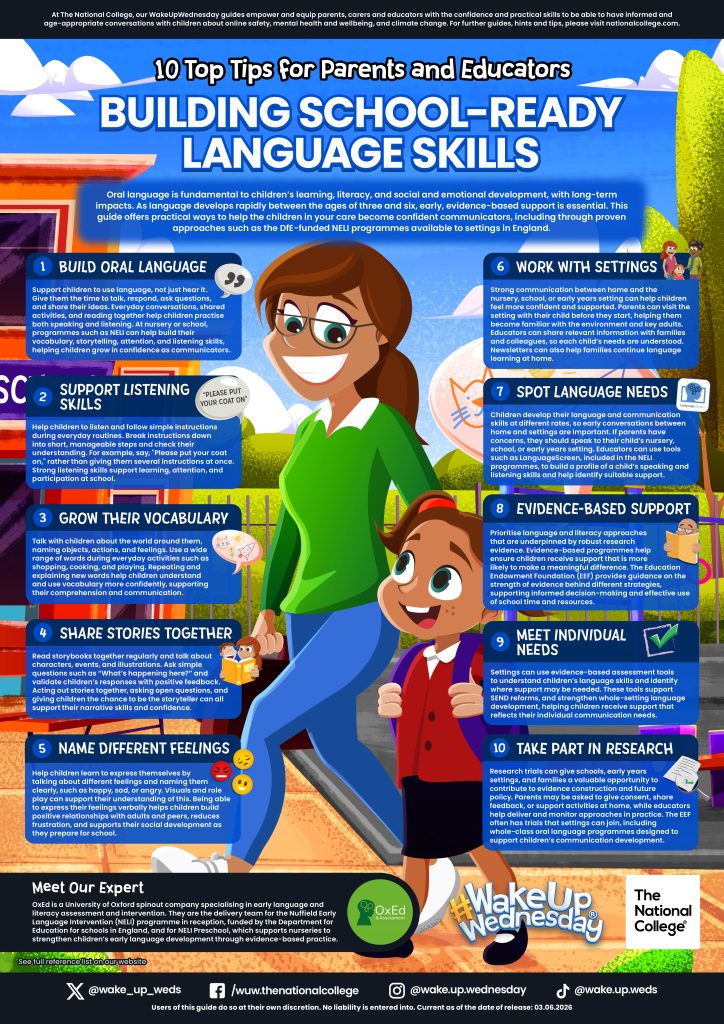
Strong oral language skills help children feel confident, connected and ready to learn. This guide explores simple, everyday ways that parents, carers and educators can support children’s speaking, listening and understanding, from shared conversations and story time to naming feelings and building vocabulary through play and routines.

On this website we use first or third-party tools that store small files (cookie) on your device. Cookies are normally used to allow the site to run properly (technical cookies), to generate navigation usage reports (statistics cookies) and to suitable advertise our services/products (profiling cookies). We can directly use technical cookies, but you have the right to choose whether or not to enable statistical and profiling cookies. Enabling these cookies, you help us to offer you a better experience.