
We are looking forward to welcoming parents/carers of Year 6 pupils into our school on Wednesday 3rd June at 5-6pm, whose children will be starting their new life here with us in September. This is a great opportunity for you to meet the team and ask any questions you may have regarding your child’s transition from Primary to Secondary School.
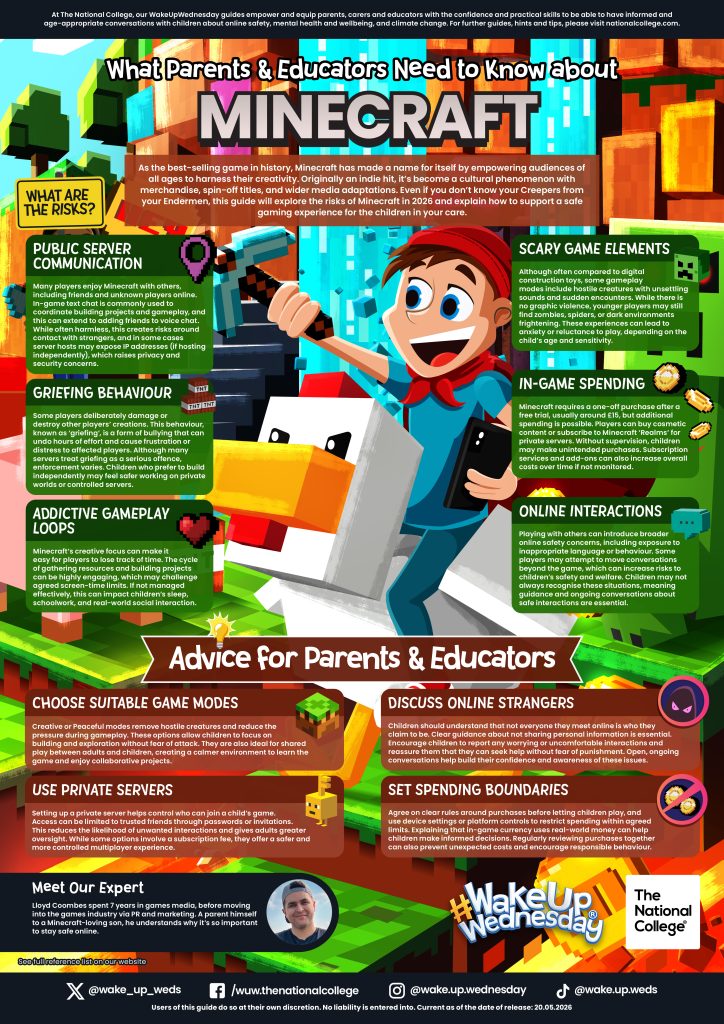
Minecraft remains hugely popular with young players, offering creative freedom and social interaction. This guide explores how features like public servers, in-game chat and multiplayer modes can introduce risks, including contact with strangers, exposure to inappropriate behaviour and privacy concerns linked to independent server hosting.
It also highlights issues such as griefing, in-game spending and potentially addictive gameplay loops. With clear, actionable advice, the guide helps parents and educators set boundaries, choose safer settings and support children in enjoying Minecraft responsibly while staying protected online.
Online grooming is a growing and deeply concerning threat, with thousands of offences recorded each year in the UK. This edition explores how offenders build trust with children through fake identities, flattery, gifts and group chats before exploiting that relationship. It also examines the rise of sextortion and how gaming platforms and social media can become gateways for harm.
Beyond sexual exploitation, the guide highlights criminal grooming and radicalisation, helping adults recognise that manipulation can take many forms. With practical advice on spotting warning signs, creating open conversations and understanding the platforms children use, this resource empowers parents and educators to intervene early and keep young people safer online.
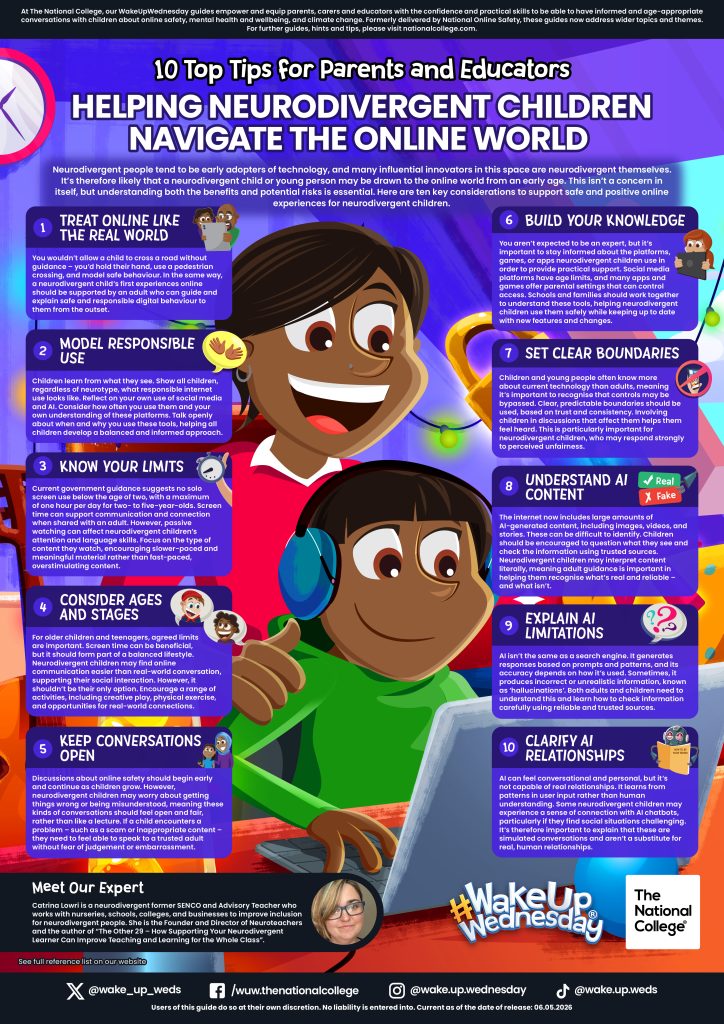
Neurodivergent children are often drawn to technology, so early, supported experiences online are key. This guide explores how adults can model positive digital behaviour, set age-appropriate limits and create open, judgement-free conversations about online safety. It also highlights the importance of balancing screen use with offline activities to support wellbeing and development.
It also unpacks emerging challenges, including AI-generated content and the blurred lines between real and simulated interactions. With clear, practical advice on boundaries, critical thinking and safe communication, this guide helps educators and families build confidence in supporting neurodivergent children to navigate the digital world safely and responsibly.
April Careers Newsletter – Out Now!
We’re pleased to share that the April edition of our Careers Newsletter is now available, bringing together the latest updates, insights, and opportunities to support students as they plan their next steps.
This month’s edition features exciting recent events at Duke’s, keeping our community up to date with what’s been happening across the school. We also shine a spotlight on higher education, offering useful guidance and information for students considering university pathways.
In addition, the newsletter explores what’s currently happening across the North East, highlighting regional opportunities and trends that could shape future career choices. A key focus this month is the importance of understanding labour market information—helping students and families make informed decisions by looking at employment trends, growth sectors, and skills in demand.
We encourage all students and parents/carers to take some time to read through the newsletter and engage with the valuable resources included.
