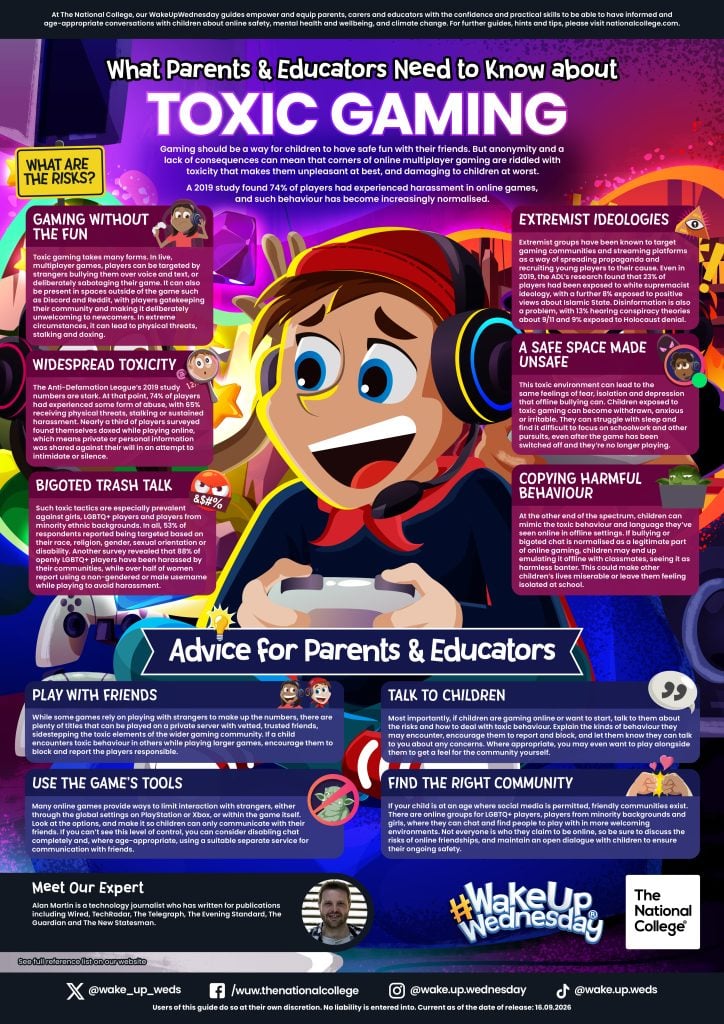
Online multiplayer games can be brilliant places for children to play, socialise and share interests, but some gaming communities can become hostile or harmful. This guide explores toxic gaming behaviours including bullying, deliberate sabotage, discriminatory abuse, threats and doxing, as well as the ways these experiences can affect a young person’s wellbeing both online and offline.
Parents and educators can play an important role in helping children navigate these challenges. The guide highlights practical steps such as using privacy and communication settings, blocking and reporting abusive players, choosing safer gaming communities and encouraging children to play with trusted friends. Above all, it explains why open conversations about harmful behaviour can help young gamers recognise problems and seek support.